By Fauzia Kaka Shafi
This war did not begin with airstrikes. It began centuries ago, long before the Islamic Republic, before the Shah and even before the modern state system. Iran’s divergence from its neighbors was already taking shape through the fusion of Persian civilizational , identity and a state-imposed Shi’a order. What is unfolding today is not an anomaly, but the reactivation of a deeply embedded structural divide where religion, power and history converge.The ongoing war involving Iran cannot be comprehended in isolation, as it results from a complex historical trajectory influenced by civilizational continuity, sectarian institutionalization and contemporary geopolitical disruption.To analyze Iran solely through the lens of the Islamic Republic is to overlook a deeper reality: Iran is not simply a modern state reacting to contemporary pressures but the inheritor of a long-standing Persian identity, one that has been repeatedly reconfigured yet never erased.
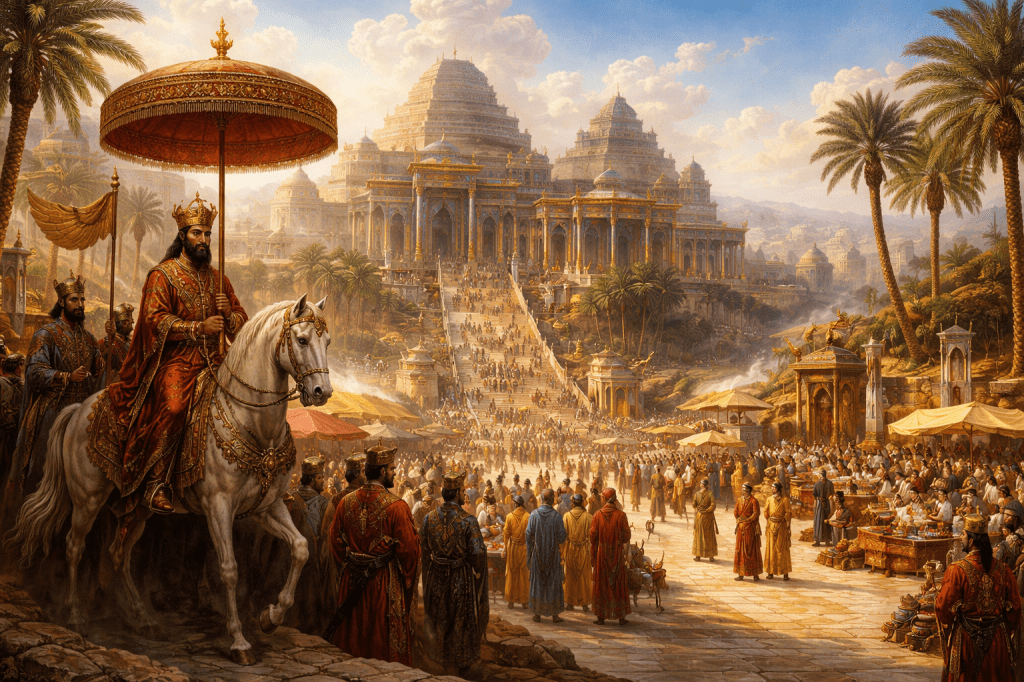
Historically referred to as Persia, Iran emerged as a distinct imperial formation, never subsumed into the Ottoman system that shaped much of its regional environment. As a result, it developed outside the dominant political and cultural frameworks of its contemporaries (Fisher, 1968). This structural autonomy fostered a durable state tradition marked by administrative continuity, cultural cohesion and a deeply ingrained conception of sovereignty. From the Achaemenid Empire to the Safavid dynasty, Iran arose not as a marginal entity but as a center of power with its own geopolitical rationale (Amanat, 2017).
The Safavid Empire in the sixteenth century established a fundamental aspect of Iran’s identity: Twelver Shi’a Islam (Halm, 1997). This was not solely a religious evolution but a calculated act of state establishment. The Safavids established religious differentiation as a fundamental aspect of the state by converting a predominantly Sunni populace to Shi’a Islam, thereby delineating a distinct confessional boundary between Iran and its primarily Sunni neighbors (Matthee, 2012). The rivalry with the Ottoman Empire evolved into an ideological conflict as well as a territorial one, solidifying a division that would endure for centuries.This dual distinction of civilization and sectarianism remains central to understanding Iran’s regional posture. Iran is neither Arab nor Ottoman in its historical identity; it is also the primary center of Shi’a Islam within a predominantly Sunni regional context (Amanat, 2017). This split has resulted in a state that functions with an increased sense of distinction, frequently defining its role in terms of resistance, autonomy and influence.
The twentieth century heralded a distinct form of disruption. During the Pahlavi reign, Iran engaged in swift modernization and established a strong alignment with Western powers, especially after the 1953 coup that reinstated Mohammad Reza Shah with the backing of the British and the United States (Wiley, 2008). Throughout this period, Iran sustained strategic relations with both the United States and Israel, serving as a cornerstone of Western security infrastructure within the region. The Shah’s Iran was, in numerous respects, the antithesis of what ensued—pro-Western, secular and geopolitically allied with the prevailing order (Keddie, 2006).
The 1979 Iranian Revolution overturned this order. It replaced the monarchy with an Islamic Republic that rejected Western dominance and reoriented Iran’s foreign policy toward ideological resistance. The subsequent hostage crisis severed diplomatic relations with the United States, while ties with Israel were dismantled entirely. Yet the revolution did not erase Iran’s deeper identity. Instead, it fused Shi’a political theology with an existing Persian sense of centrality, producing a state that is both ideologically driven and historically grounded.
In the subsequent decades, Iran’s strategic conduct embodied this combination. The Iran–Iraq War solidified a security-first doctrine, while subsequent regional events, especially the 2003 invasion of Iraq and the Syrian conflict, facilitated Iran’s expansion of influence via networks of non-state actors and strategic partnerships. Over time, Iran’s role in the regional security framework transformed into one characterized by deterrence and entanglement.
The recent escalation, with confrontation between the United States and Israel, signifies a transition from covert struggle to more explicit forms of warfare. This shift reflects the continued weakening of an already fragile regional order, where underlying tensions have long outpaced mechanisms for meaningful resolution. What emerges is not stability but negative peace, where overt violence is intermittently contained while the structural roots of conflict remain unresolved (Galtung, 1969). This trajectory is further reflected in the work of Syrian scholar Bassam Tibi, whose analysis highlights how unresolved identity politics, persistent state fragility and competing ideological projects interact to sustain chronic instability, embedding cycles of escalation within the very structure of the region’s security dynamics.
We cannot solely attribute Iran’s actions to recent provocations or ideological considerations. They are influenced by the intersection of three persistent forces: a civilizational identity grounded in Persia, a sectarian identity formalized through Shi’a Islam and a revolutionary philosophy that repudiates subservience to external authority. Collectively, these pressures generate a condition that is simultaneously defensive in its threat perception and expanding in its quest for influence (Ehteshami, 2002).
What seems to be escalation now is, in fact, continuity, the enduring nature of a historical framework in which identity, conviction and power are intertwined, and where the past serves not merely as a backdrop to conflict, but as one of its principal catalysts.
 The Escalation Brief
Leave a comment